

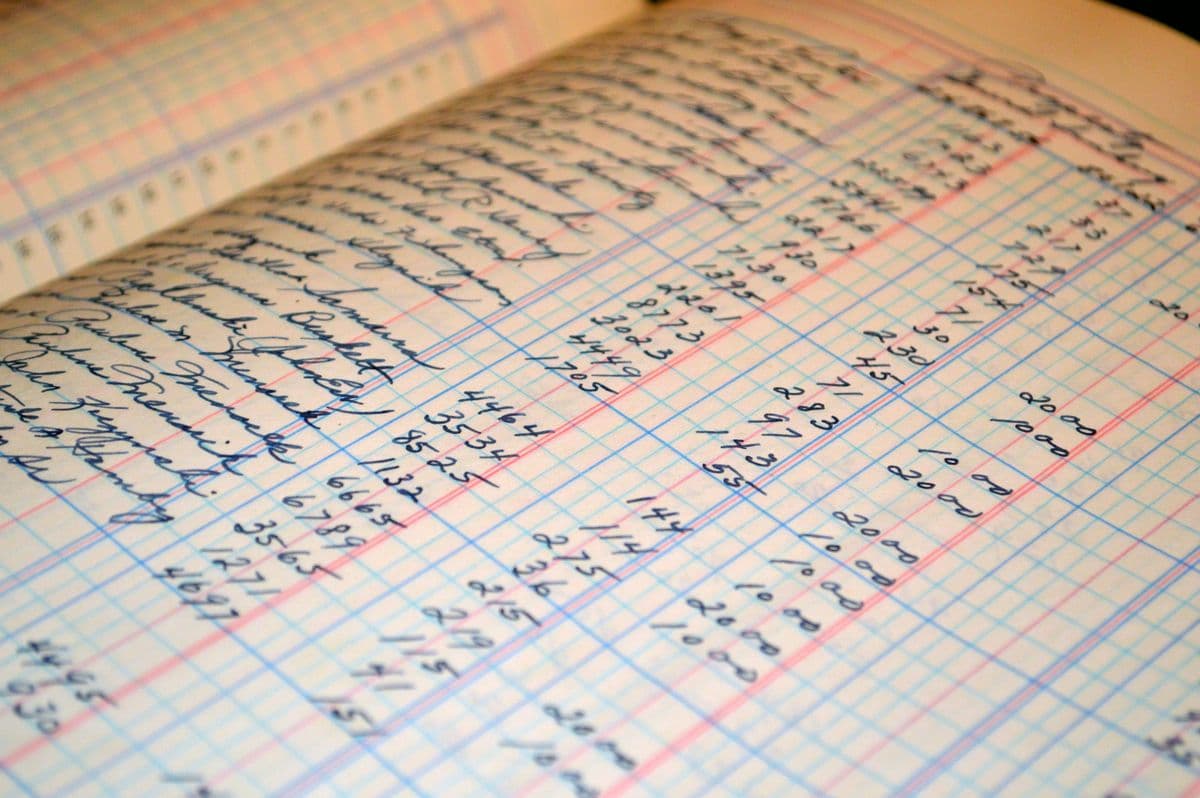
There is no such thing as an ancient family name. Surnames are a filing system, and like most filing systems they got invented when somebody needed to tax people and couldn't tell two Johns apart.
That's not a throwaway line — it's the single fact that explains almost everything odd about surnames. Why so many of them are jobs. Why half of Europe's most common surname means "blacksmith." Why Iceland doesn't have them and Turkey handed them out over eighteen months in 1934. And why a generated surname can be spelled perfectly and still feel wrong.
They're younger than the Norman Conquest
In England, hereditary surnames spread in the roughly three centuries after 1066 and weren't universal until around 1400. Before that, a byname was a description that died with you — John the miller's son might have a son who was John the smith, and nothing was inherited but the John. What turned bynames into surnames was record-keeping: manorial rolls, tax lists, and eventually the poll taxes of 1377–81, all of which needed a stable second token per person. The National Archives' family-history guides are built around exactly those record sets, which is why English genealogy tends to hit a wall in the 14th century — that's where the names stop being names.
So when someone says a surname "goes back centuries," they usually mean six or seven of them, not twenty.
The four sources, and the one that dominates
Nearly every European surname resolves to one of four things. The interesting part is how unevenly they're distributed.
Patronymic — "son of"
The most common globally and the most linguistically visible, because the affix is right there.
| Language | Marker | Example | Reads as |
|---|---|---|---|
| English / Scandinavian | -son, -sen | Johnson, Andersen | son of John / Anders |
| Gaelic (Scots, Irish) | Mac-, Ó- | MacDonald, Ó Briain | son of / descendant of |
| Spanish, Portuguese | -ez, -es | Rodríguez, Fernandes | son of Rodrigo / Fernando |
| Slavic | -ovich, -ov, -ski | Petrovich, Ivanov | son of Peter / Ivan |
| Turkish | -oğlu | Türkoğlu | son of the Turk |
| Arabic | ibn, bin | ibn Sina | son of Sina |
| Greek | -poulos, -idis | Papadopoulos | son of the priest |
Occupational — and it's mostly one job
Here's the thing that surprises people. Take the words for "blacksmith" across Europe and you get Smith (English), Schmidt (German), Ferrari and Ferraro (Italian), Herrero (Spanish), Lefebvre and Faure (French), Kovács (Hungarian), Kowalski and Kowalczyk (Polish), Kuznetsov (Russian), Haddad (Arabic), Seppänen (Finnish). Every one of these is at or near the top of its country's surname frequency list.
Not because there were more smiths than farmers — there weren't, by an enormous margin — but because farmer wasn't distinguishing. In a village of a hundred agricultural workers and one smith, only the smith gets a useful byname out of his job.
The rest of the occupational names are mostly specialist trades for the same reason: Cooper (barrels), Fletcher (arrows), Chandler (candles), Wainwright (wagons), Thatcher, Tanner, Sawyer, Baxter (a baker, feminine form), Webster (a weaver, likewise).
Toponymic — "from somewhere"
Split into two kinds that behave differently. Settlement names — Washington, Lincoln, di Caprio, da Vinci — mark someone who moved, because nobody in the village of Lincoln is called Lincoln. Landscape names — Hill, Brook, Ford, Underwood, van Dijk ("of the dike"), Beaumont ("beautiful hill") — mark where in the village you lived, and they work locally.
That distinction is genuinely useful in fiction: a settlement surname implies migration, a landscape surname implies staying put.
Descriptive — "the one who is"
Brown, White, Little, Long, Armstrong, Russell (from Old French rous, red-haired), Petit, Grosso, Ó Súilleabháin ("descendant of the dark-eyed one"). These are the oldest-feeling and the least stable, because they describe a person rather than a lineage and had to survive being inherited by someone the description didn't fit.
Some countries got surnames in living memory
Turkey had no hereditary surnames at all until the Surname Law (Soyadı Kanunu, Law No. 2525) passed on 21 June 1934 and took effect the following January. Every citizen had to pick one, register it, and the state rejected names it considered foreign or offensive. There are Turkish families whose surname is younger than their house.
And Iceland went the other way. Icelandic law still runs on patronymics: Jón Stefánsson's daughter is Guðrún Jónsdóttir, and neither name is a family name in any inheritable sense. Family names were effectively frozen by legislation in 1925 and the position is carried forward in the Personal Names Act No. 45/1996 — you may keep one your family already had, you may not adopt a new one. Icelandic phone books sort by given name, because sorting by "surname" would sort by father.
Similar late or partial adoption applies across large parts of Indonesia, Myanmar, Tibet and Mongolia. "Everyone has a first name and a last name" is a claim about paperwork in a particular set of countries, not about humans.
Why generated surnames feel wrong
They're almost never misspelled. They're mismatched, and there are three ways it happens.
Century mismatch. Pairing a surname with a given name that couldn't coexist with it. "Brayden Fletcher" is fine as a modern name and impossible as a 15th-century one, because Fletcher was an active job description then and Brayden hadn't been invented.
Register mismatch. Occupational surnames carry class information whether you want them to or not. In English fiction, Smith and Baker read as ordinary; Beaumont, Percy and Neville read as landed. That's not snobbery, it's the Norman/Anglo-Saxon split showing through six hundred years later.
Frequency mismatch. Real surname distributions are extremely lopsided — a handful of names cover a large share of the population and the tail is enormous. A cast where every character has a distinctive, unrepeated surname is statistically strange. Give two of them the same one.
If you're generating a batch, the fix is to decide the century, the region and the class first and then throw away everything that doesn't fit, rather than accepting whatever a last name generator hands you and hoping the reader isn't paying attention. Over-generate and cull — it's much faster than trying to specify your way to a single perfect result.
Picking one that carries weight
The best fictional surnames do one job beyond identification. Occupational names tell you what a family used to be and often no longer is. Toponymic settlement names tell you they came from elsewhere. Patronymics tell you the culture doesn't think in terms of dynasties. Descriptive names date the family to before anyone was writing things down.
Pick the source before you pick the name, and the name will mostly pick itself.
Cover photo via Pexels.